How Much Does A Suit Cost: From Off-The-Peg To Bespoke
Buying a suit is no small undertaking, so this guide will ensure you squeeze every bit of value out of your budget and come out looking like a sartorial masterpiece.
Every man should own at least one suit. Whether you need to wear one to the office day-in, day-out, or you have a sartorial penchant for dressing in a classic fashion, a suit is the ultimate expression of class and craft. But not all suits are equal, and the price range can vary wildly, from sub £500/$500 to £10,000/$12,000 or more.
So what makes one suit more expensive than the other? In short, a lot of factors, but mainly quality of materials and the level of craftsmanship. From affordable off-the-peg styles to exquisite bespoke tailoring via made-to-measure suits, the options are many, which can make shopping for a good suit a minefield, even if you do have plenty of money to throw at it.
To help, below we break down what to look for at every price point to ensure that you get the best bang for your buck.
Suits under £500/$500
Look for: perfect fit
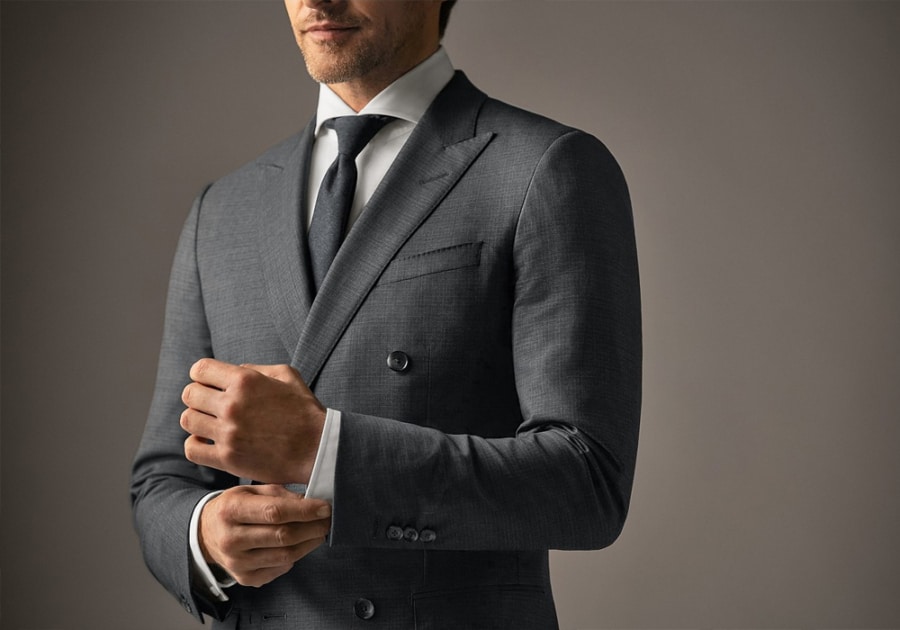
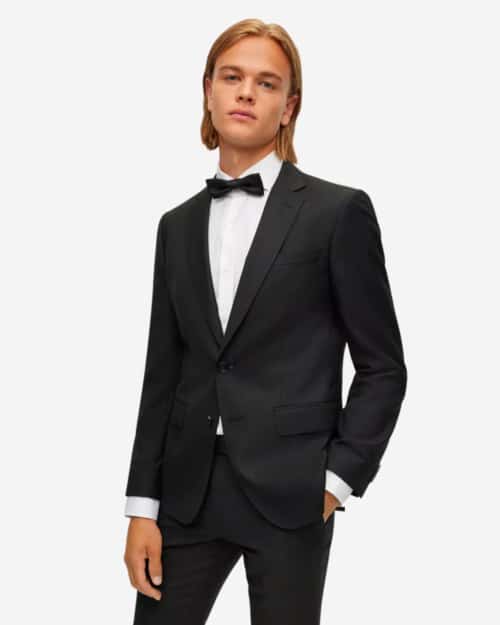
Hugo Boss
This price point restricts you to ‘off-the-peg’ styles, which is a term used to describe a suit that is cut to a generic block. If you are anything close to ‘average’ body shape then you’ll most likely fit the requisite size, give or take a few alterations.
Because of the price, it’s unlikely that you’re going to find a suit in a high-quality worsted wool (in the super 120s merino region) so keep your expectations in check. However, that doesn’t mean you can’t find great tailoring – and by great we mean a suit that fits near enough perfectly.
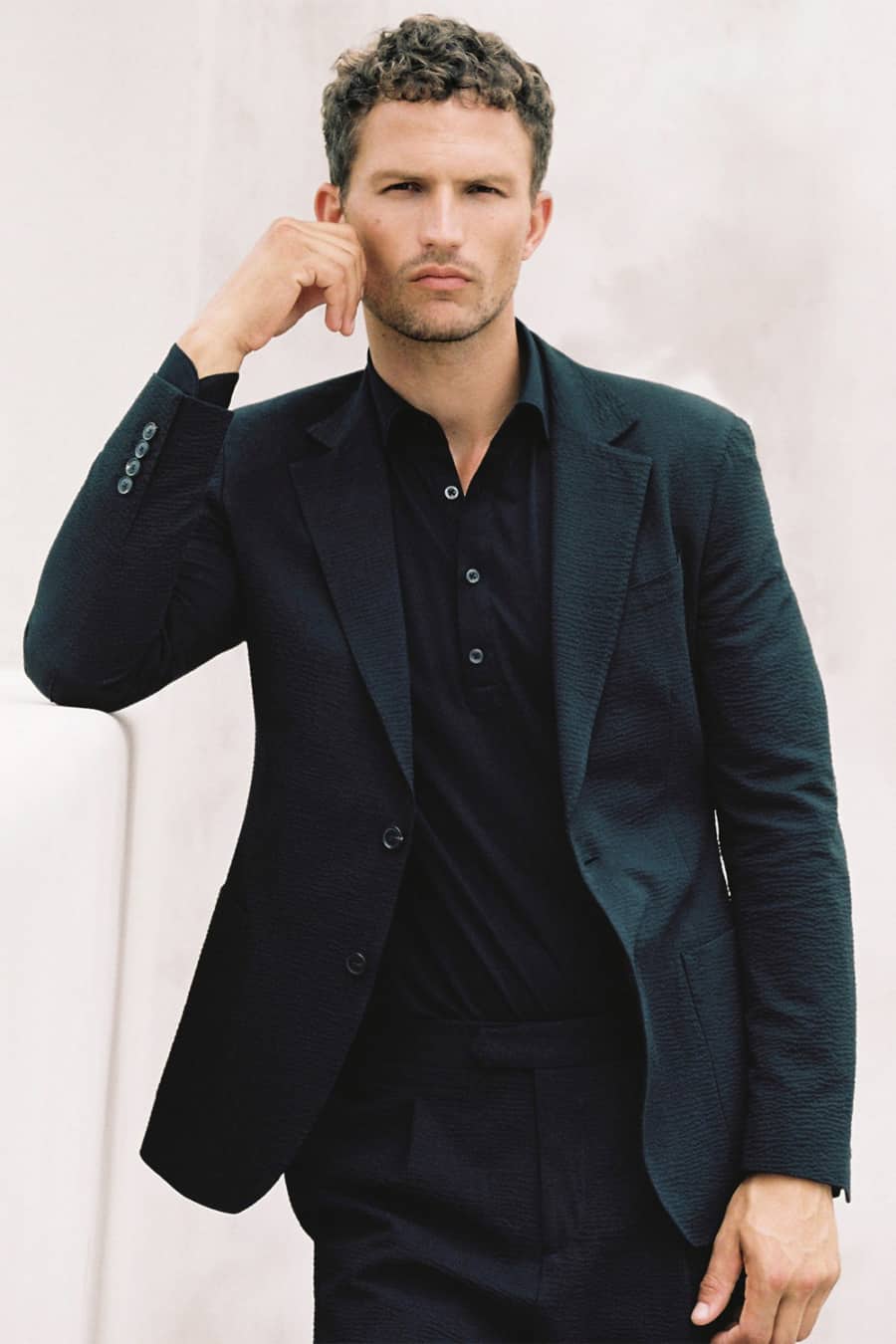
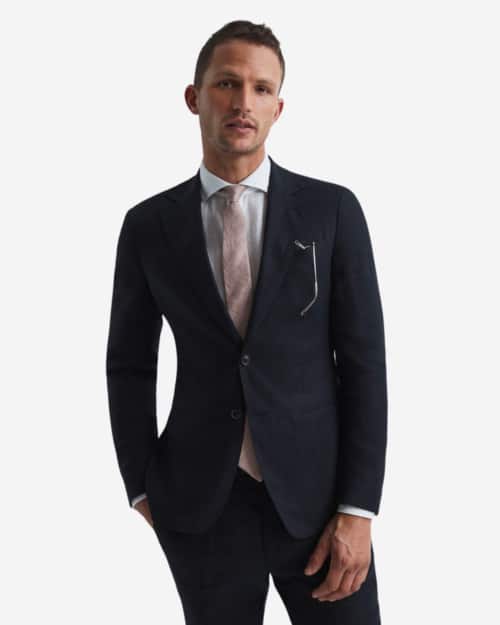
Reiss
At any price level, fit is the ultimate factor. The average person will not be able to recognise the nuances of wool quality, but they will almost certainly be able to tell if the shoulders are too tight or the sleeves too long. The aforementioned shoulders are the key measurement because they are almost impossible to alter, whereas sleeves can be taken up (and sometimes let down) in most cases.
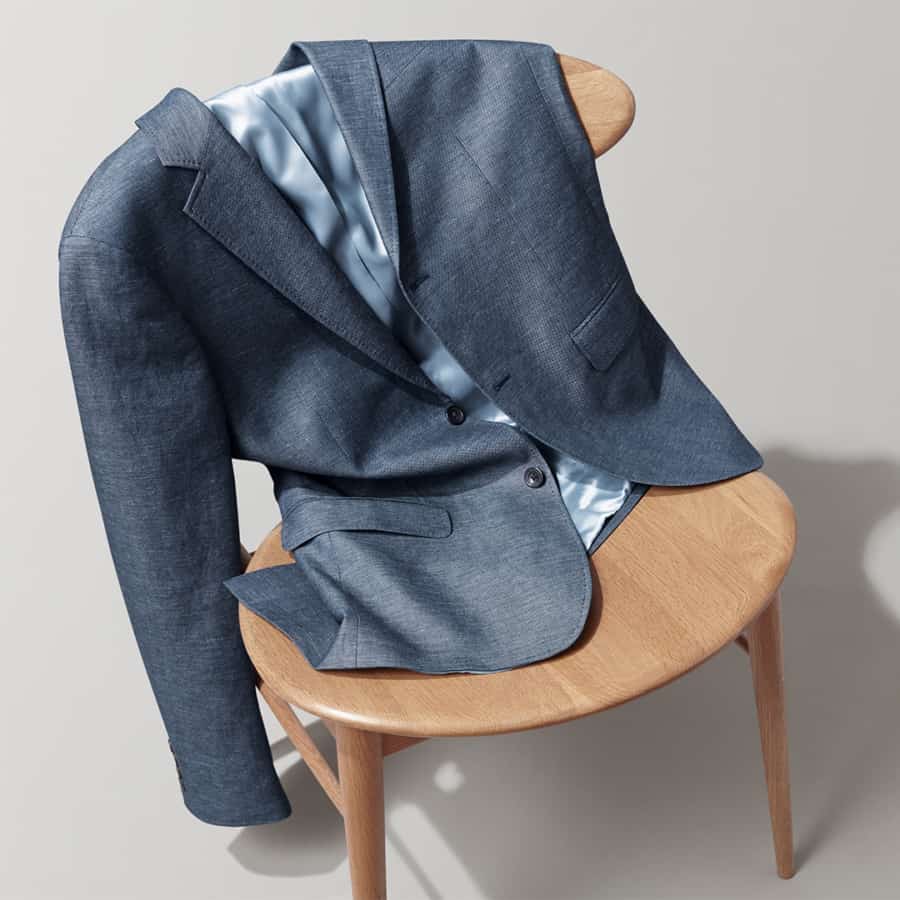
You’re also not going to get any bells and whistles in the form of canvassing and silk linings (polyester lining will be the most common option), but you’ll manage. The high street is your best option with brands such as COS offering boiled virgin wool jacket styles for under £200/$200, which represents great value for money. It’s going to be slightly more textural than a super-fine merino cloth, but will nevertheless be lightweight and durable, which is key if you’re going to be wearing it to the office.
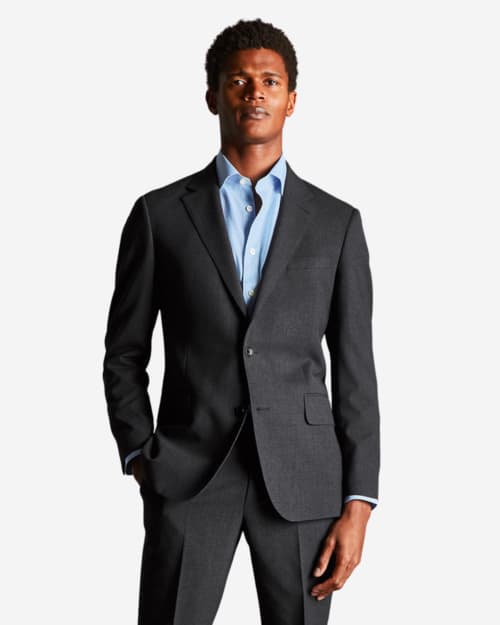
Charles Tyrwhitt
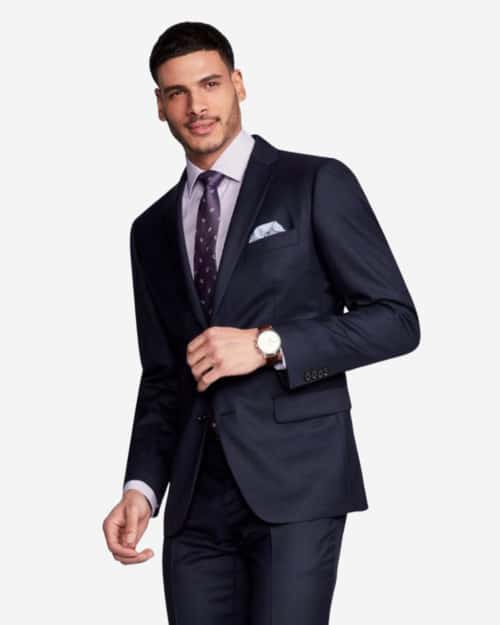
You’ll also find that most off-the-peg high street suit jackets will be cut slightly slimmer, with relatively slim lapels that is in keeping with a contemporary aesthetic.
Besides wool, you’ll cotton or cotton/linen blends are available in this price category too, both of which make for great spring and summer options. Cotton doesn’t have the naturally elegant drape that a fine worsted wool has so it’s often a better choice for wearing in a more casual context.
Recommended brands
COS, Reiss, Charles Tyrwhitt, Hawes & Curtis, Indochino, Hugo Boss.
—
Suits under £1,000/$1,200
Look for: better quality fabrics
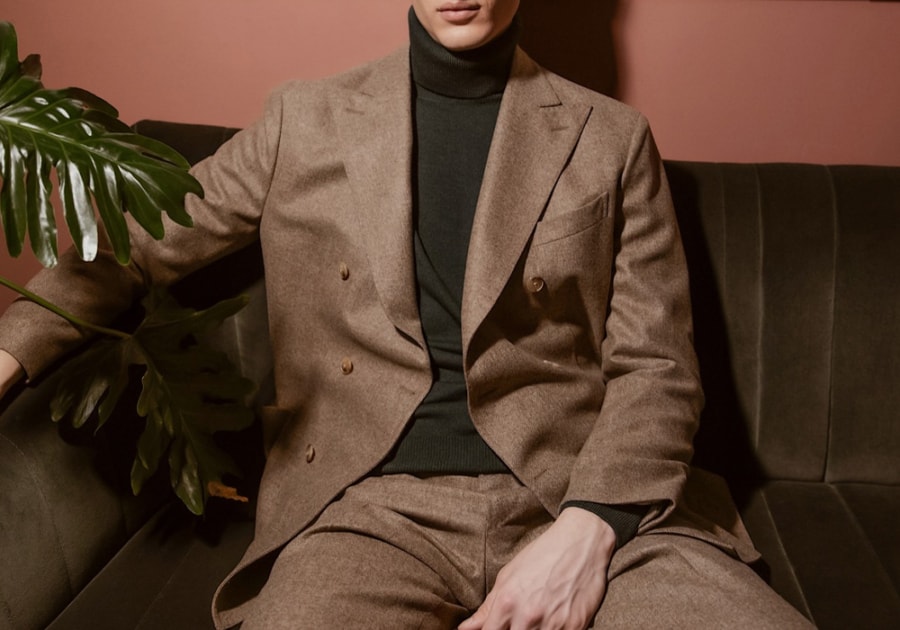
Boglioli
You might think that doubling your budget would make the buying process that much easier but you need to be careful that you’re not coughing up undue amounts for the brand name and the marketing spend that comes with it.
Again, off-the-peg styles are going to be in your crosshairs – don’t be tempted by any made-to-measure offers at this price point as they are unlikely to be truly M2M and your money would be better spent finding a great off-the-peg suit that can be altered to perfection.
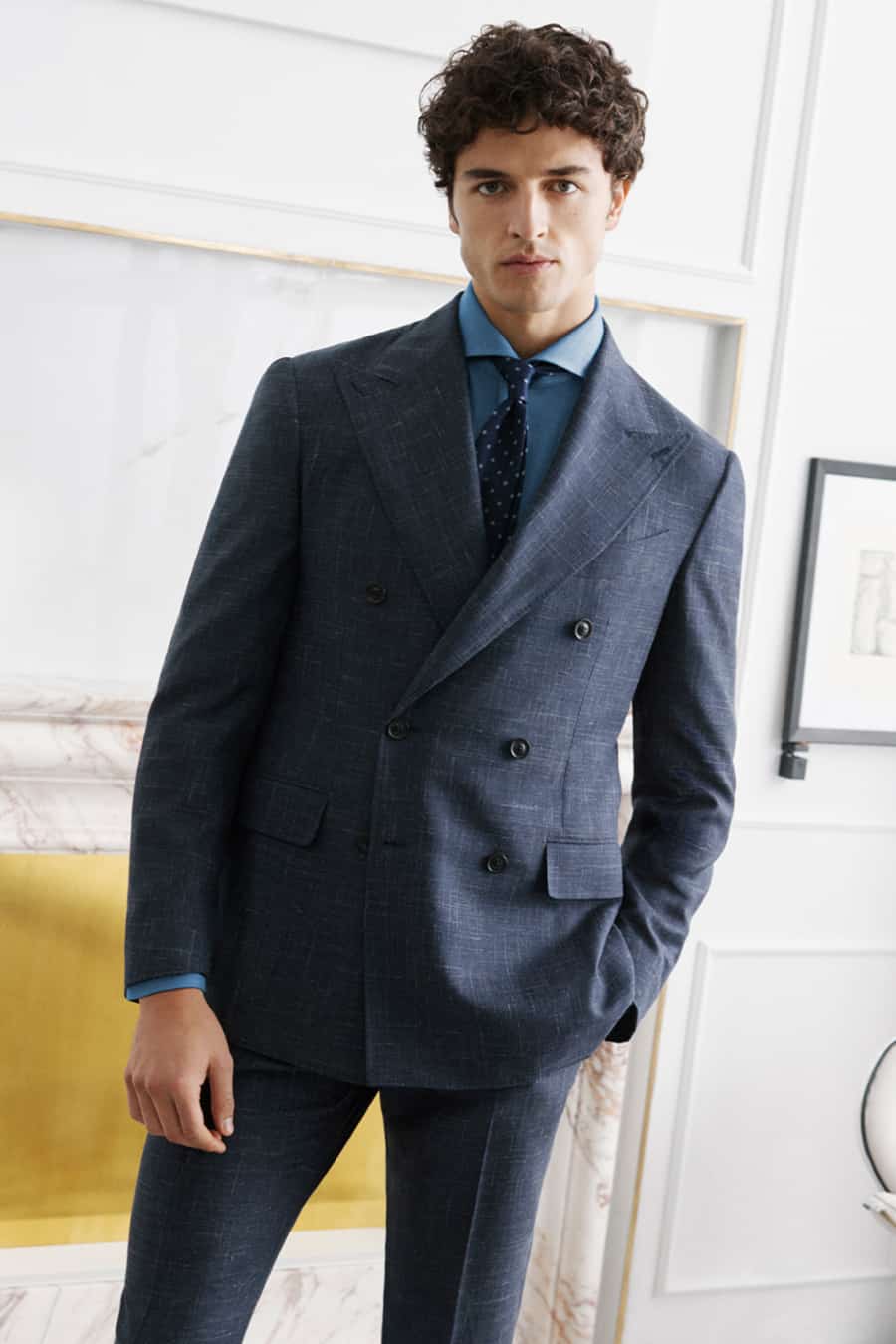
Canali
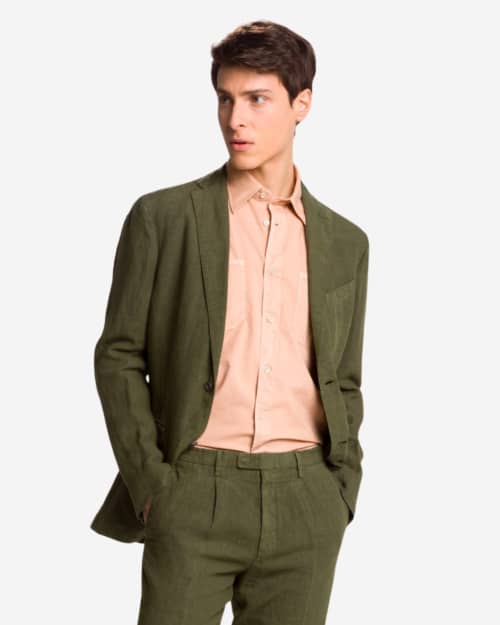
This budget does open up a world of designer brands, but think less about the label and more about the fabric quality, with super 120s worsted merino cloths a superb option, as well as pure linen styles for summer wear.
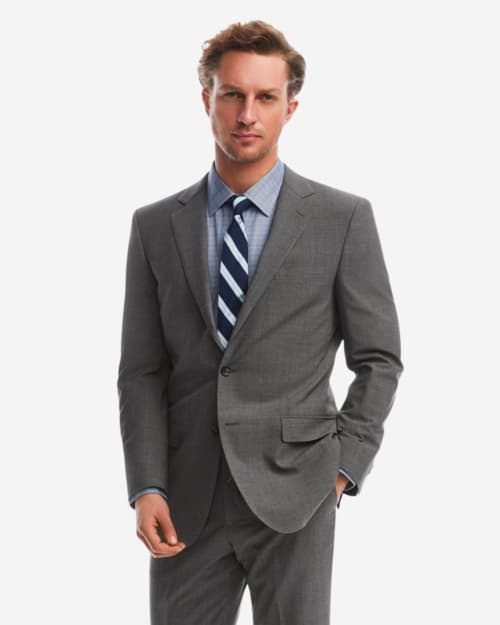
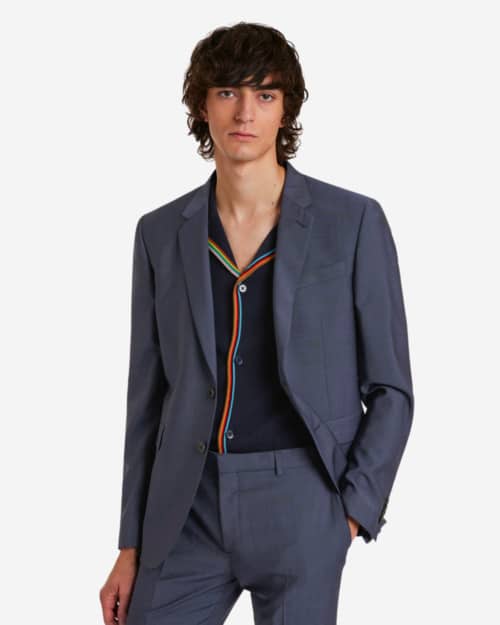
Sale season will bring into play a number of the Italian tailoring specialists (try Canali, Boglioli and Barena), while brands such as Paul Smith and Tiger of Sweden offer a number of excellent styles around the £700/$850 mark. The latter two have fantastic tailoring pedigree and produce timeless silhouettes as well as more contemporary ‘fashion’ styles.
Suitsupply
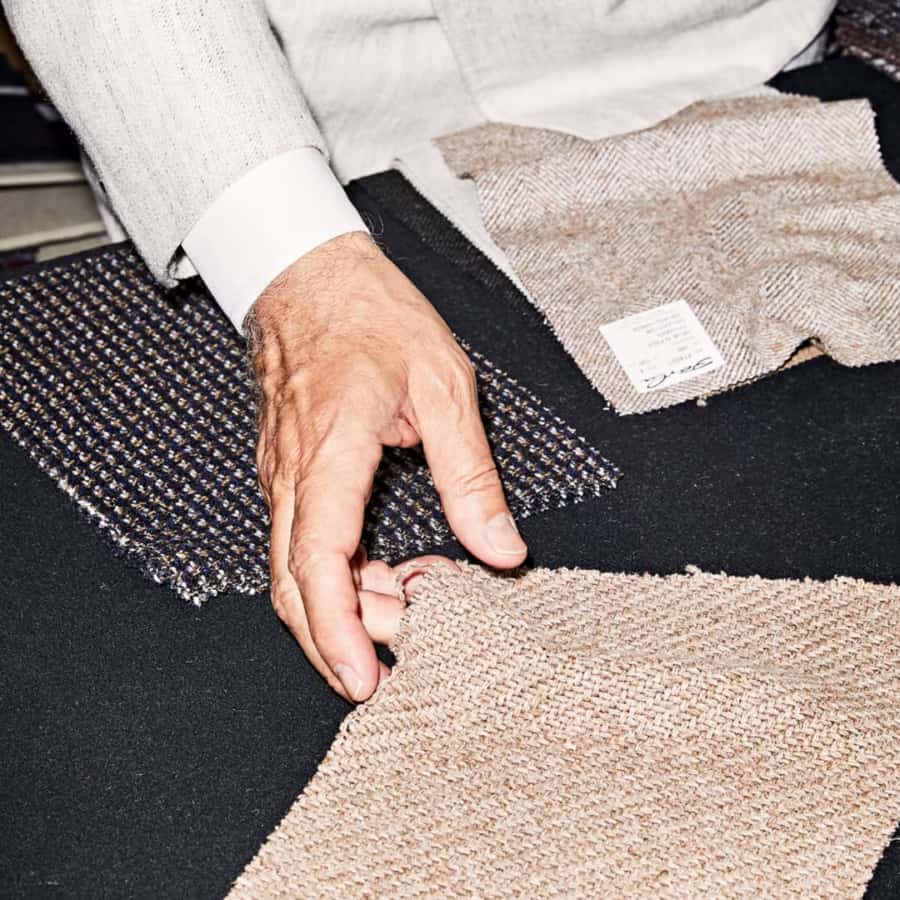
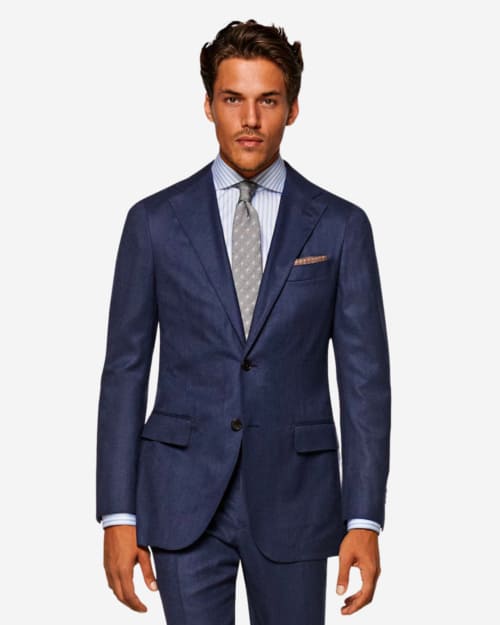
While there is a certain satisfaction in wearing a label, don’t sleep on tailoring giant Suitsupply, which absolutely kills the competition in this price bracket. With classic and contemporary cuts on offer, plus an in-house alterations service, the Dutch behemoth has somehow managed to source some incredible wool fabrics from some of the finest mills in the world, not least Vitale Barberis Canonico, the kingpin of the milling region of Biella in Italy.
Suitsupply will often even have cashmere blend suits for under £1,000/$1,000, which represents unbelievable value. Cut mainly to three Italian-style silhouettes (Lazio, Havana, and Napoli), you will be hard-pressed to find better anywhere else. For this amount of money, most of the jackets will come with a synthetic half-canvas construction for a bit of flattering structure. Again, just take the time to ensure that the jacket fits perfectly across the shoulders – everything else can be altered in due course (the brand offer this service in house, too).
Recommended brands
Suitsupply, Todd Snyder, Brooks Brothers, Paul Smith, Knot Standard, Tiger of Sweden, Canali, Boglioli, Barena.
—
Suits under £2,500/$3,000
Look for: made-to-measure options
Gieves & Hawkes
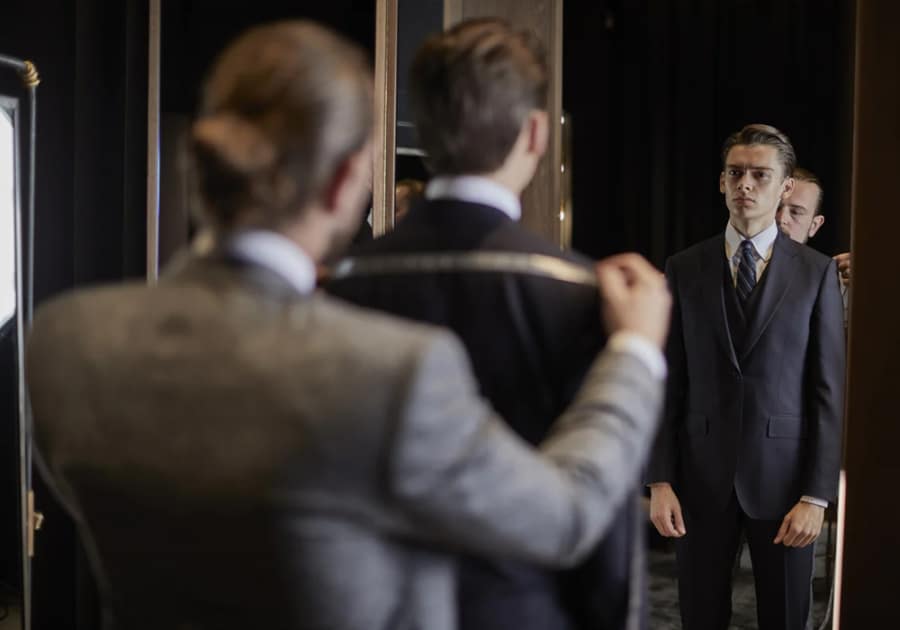
A made-to-measure (M2M) suit represents the halfway house between off-the-peg and bespoke. It can provide exceptional value for money and a stunning result to boot, provided that you know what you’re looking for. A solid investment for anyone looking to level up their suit game, M2M suits give you that level of cut and finish that an off-the-peg can’t match, together with a fit that should be pretty close to bespoke, even if the construction doesn’t include all the bells and whistles.
However, there is a lot of obfuscation in the tailoring industry around what exactly M2M means. Some examples will have hand-finished elements to the jackets and trousers while others will be machine finished. Others will ham up the in-store measuring process, only to send the details to a workshop in China where the suit is actually made. At its core, M2M allows the customer a far greater degree of choice when it comes to cloth, details and fit, but most purveyors will still be working off of a house suit block (think of it like a template).
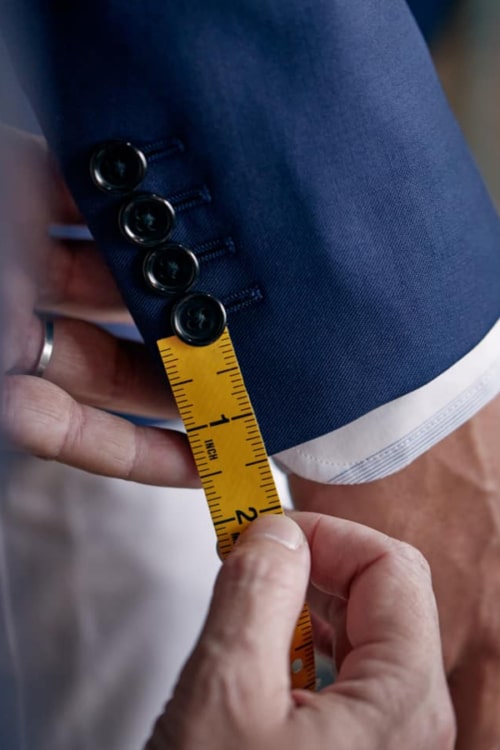
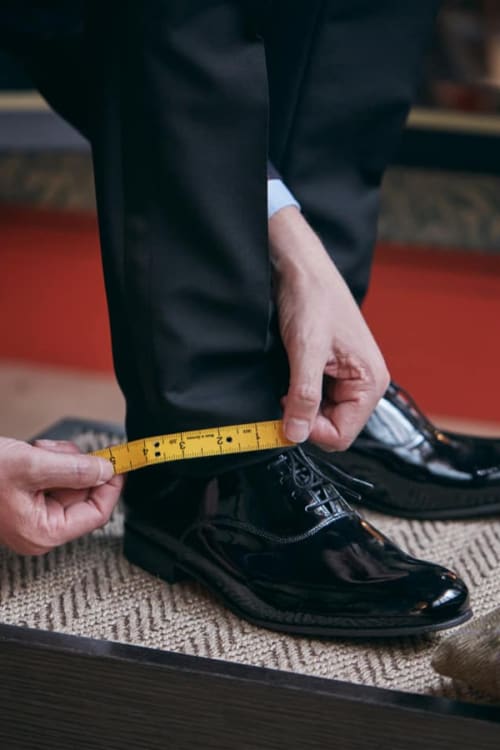
The M2M experience is critical when it comes to the quality of the end result. The tailor should be on hand to guide you through the process and ensure that you are making the correct choices based on the way you are going to wear the suit – from the weight of the fabric to more superficial decisions such as the pattern of the cloth or the pocket configurations – but your money essential determines the quality of the construction.
The measurement process is where the tailor will determine whether you have, for example, one shoulder higher than the other, or a prominent chest and so on. This is also the stage where you will ascertain certain stylistic preferences, such as pleated trousers. Finally, you will discuss with your tailor the matter of the details: lapel style, pocket options, cuff buttons, linings, canvassing and such like. These options will be limited to a certain degree, as only a bespoke service can give you carte blanche.
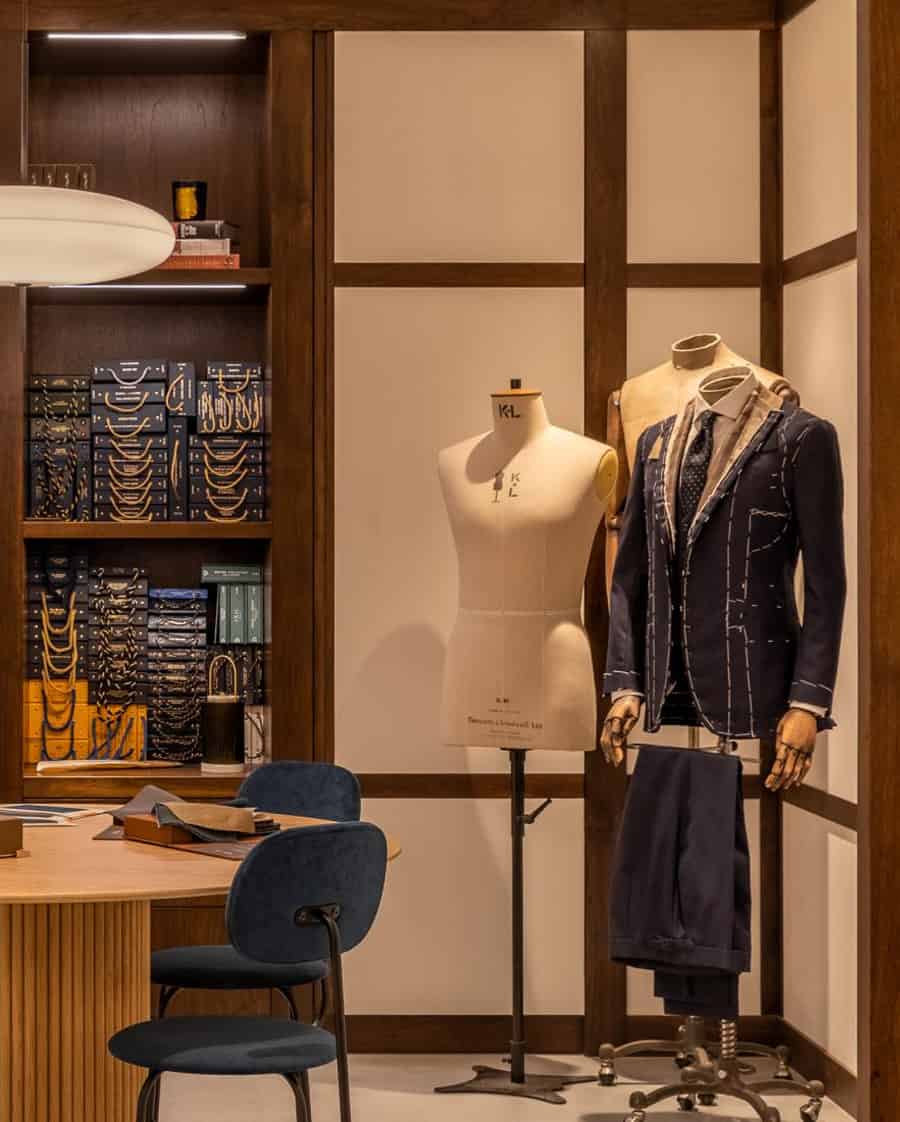
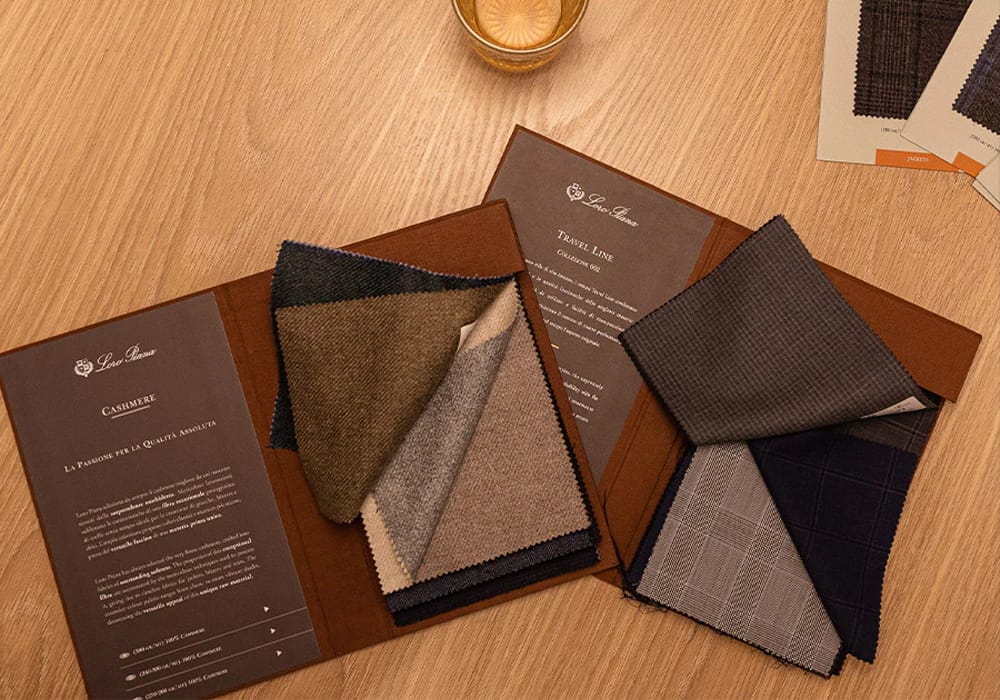
Once this is done, and you’ve stumped up your deposit, the suit will take anything from a month to three months to come back in a first draft, at which stage you’ll be called in to be measured in it so as to make any small necessary tweaks. Most M2M services will build in a little extra fabric so that you can have the suit refitted if your body shape fluctuates over time. You might also want to have a spare pair of trousers made in cases when you know you are going to be wearing the suit frequently (trousers always wear out quicker than jackets).
M2M is certainly a great option for those who might not perfectly fit the ‘average shape’ and who don’t want to spend countless hours trying on luxury off-the-peg suits from a multitude of brands. Construction is, in most cases, going to be excellent, making for a good investment. So where do you find such services? In the UK, Savile Row is a very good place to start, with stalwarts such as Gieves & Hawkes and Richard James both providing good options.
P Johnson
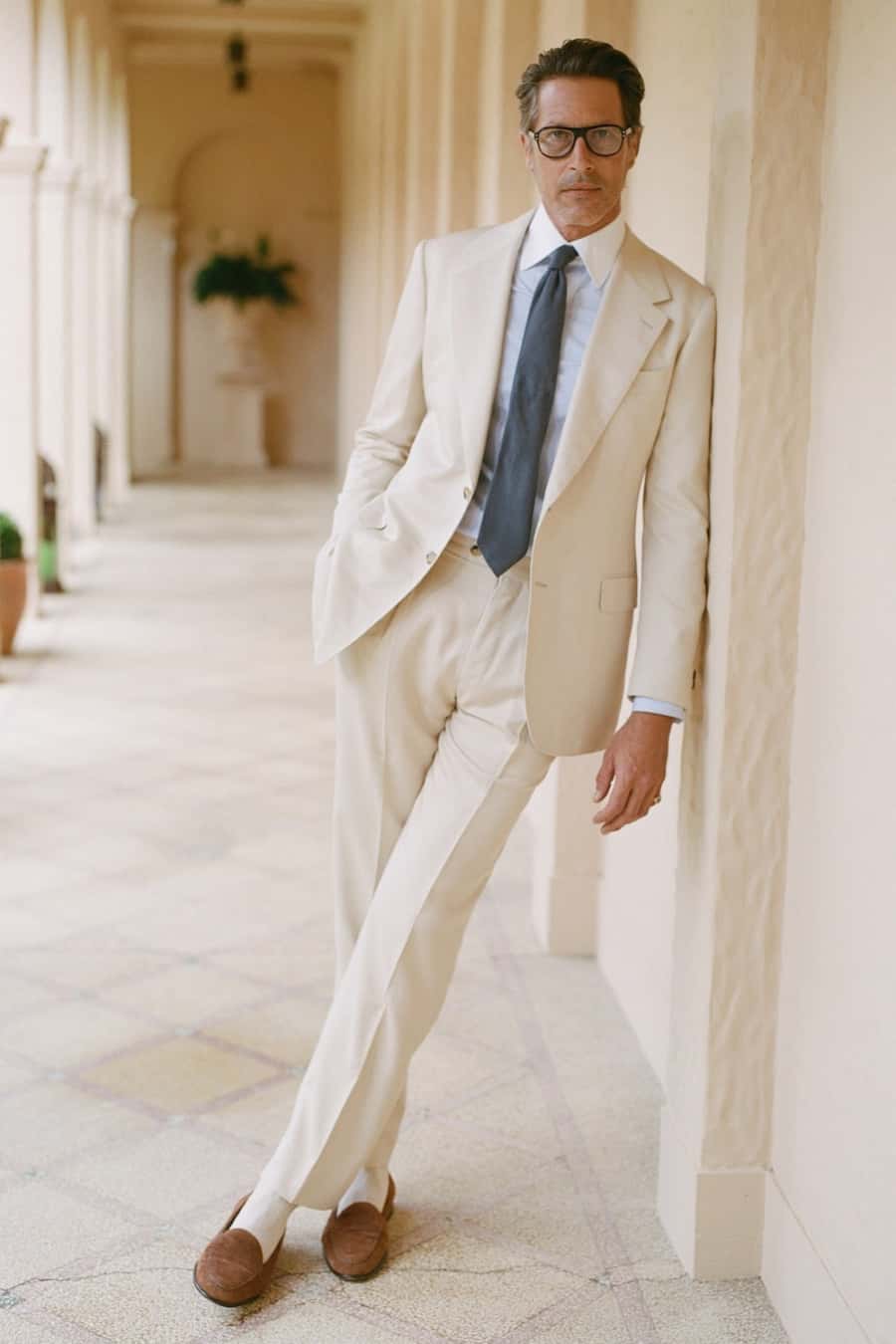
Savile Row is by no means the only option however. The likes of Anglo Italian, Thom Sweeney and P. Johnson all offer stunning M2M suits that you will be extremely proud to wear and that should last you a lifetime if cared for properly.
Recommended brands
Gieves & Hawkes, Richard James, Anglo Italian, Thom Sweeney, P. Johnson, Hackett.
—
Budget no limit suits
Look for: the bespoke experience
Huntsman bespoke
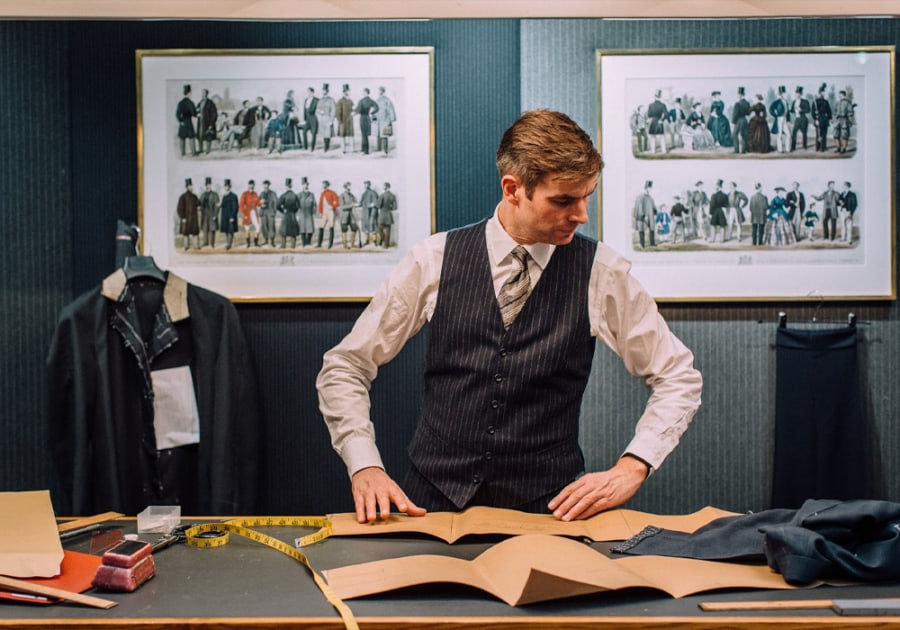
If budget isn’t even a consideration, and you’re a sartorial connoisseur, then going bespoke is the finest possible suit route you can go. Savile Row is the home of bespoke tailoring in the UK, while many of the Neapolitan tailoring houses also offer exceptional bespoke services for that Italian style of suiting.
Of course, the quality of materials and the level of craftsmanship involved in bespoke tailoring is the pinnacle of the suit-making craft, and allows for the highest degree of individual specification, hence why you should go to your tailor with a fairly good idea of what you want. Naturally, your tailor will assist in every decision (of which there are many), but opting for bespoke is better suited to someone who perhaps wants something unique, or has a body shape that requires the expert skill of a master cutter.
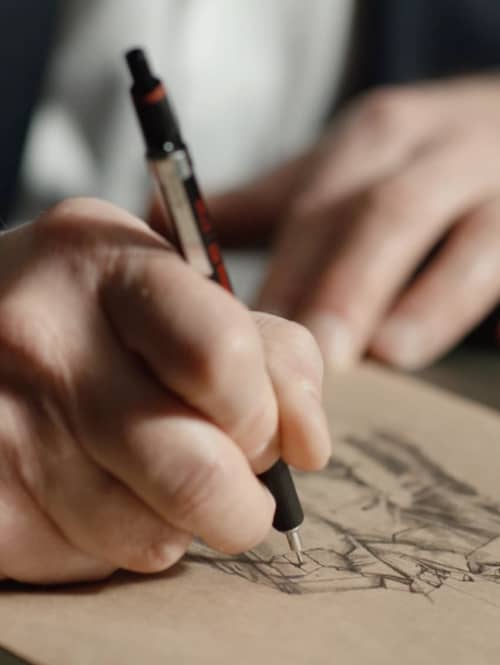
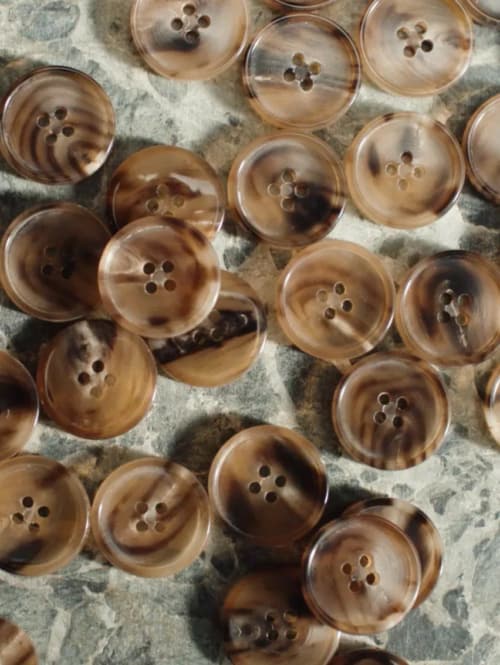
Whereas M2M uses a suit template by and large, true bespoke does everything from scratch, tailoring a garment that fits you to perfection and accounts for any and all physical quirks. The first measurement process is the integral step, where the tailor will take in excess of 30 different measurements with which to create the initial paper pattern that will be stored indefinitely. This will be followed by further fittings as the handmade suit construction progresses.
Choosing the cloth is a process that should not be rushed and it’s here that a skilled tailor will be able to guide you through literally thousands of options to finally land upon the perfect fabric.
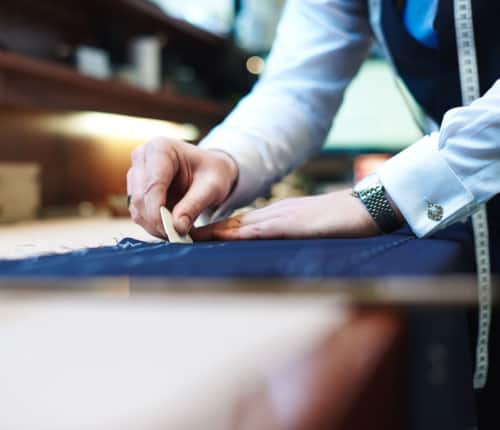
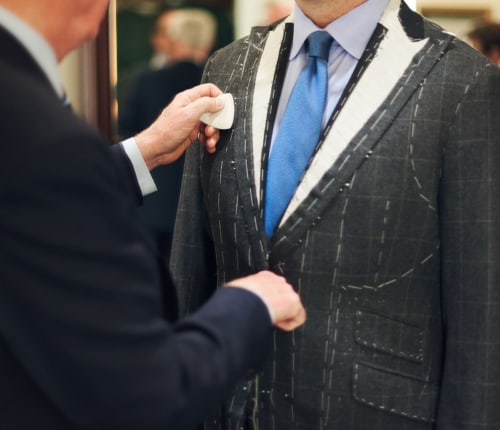
Bespoke jackets are almost always fully canvassed. Canvassing refers to the inner structure of the suit, or the interfacing between the outside of the jacket and the lining, and is typically constructed from horsehair or a blend thereof. It can be made in varying thicknesses to suit the weight of cloth used, the point being to create a balance and drape.
A bespoke jacket will always have a handstitched canvas, whereas a made-to-measure suit will more often than not be half-canvassed and fused with glue rather than stitched (which sometimes makes dry-cleaning problematic). The full canvas moulds to the body over time, creating the most flattering silhouette.
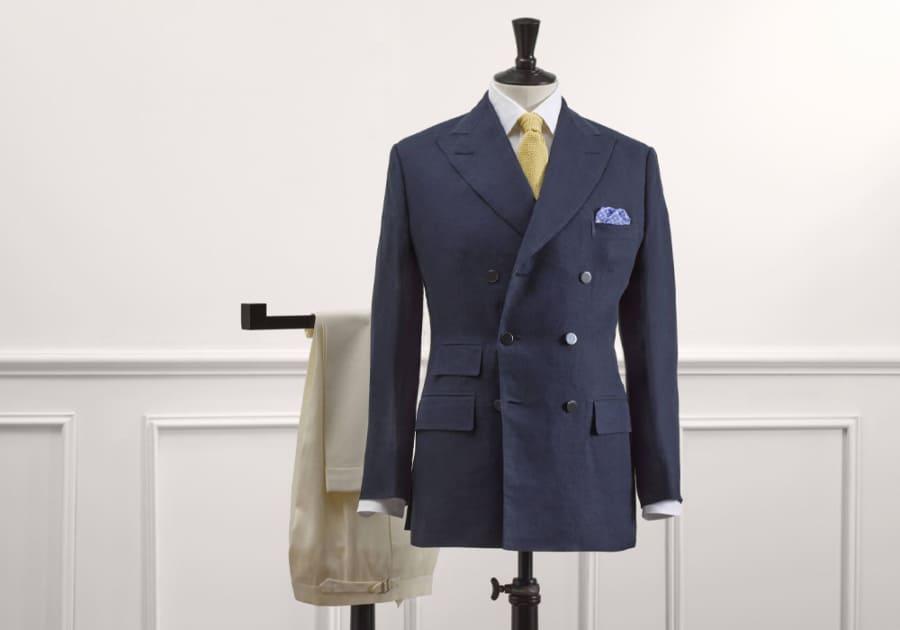
Anderson & Sheppard bespoke
The cost of bespoke suits will vary quite a lot depending on the cloth you choose and the level of personal details you require (such as hidden pockets or certain linings etc). Typically, prices start around £2,500/$3,000 and can go anywhere up to £20,000/$24,000 (in the case of somewhere like Zegna).
As mentioned before, Savile Row is the Mecca of bespoke and offers a great deal of skill and heritage thanks to the likes of Huntsman, Henry Poole, Gieves & Hawkes, Dege & Skinner, and Davies & Son, just to name a handful. Each establishment prides itself on its ‘house cut’ so it would pay to visit many to understand the one that best suits what you’re after.
In the same Mayfair vicinity you would also do well to visit Anderson & Sheppard, Thom Sweeney and Lorenzo Cifonelli. If you fancied a vacation as part of the process, then we would heartily recommend a trip to Naples, the other bespoke epicentre where storied houses such as Rubinacci, Cesare Attolini, Orazio Luciano and Sartoria Dalcuore all ply their highly accomplished trade.
Recommended brands
Zegna, Huntsman, Henry Poole, Gieves & Hawkes, Anderson & Sheppard, Thom Sweeney, Lorenzo Cifonelli, Rubinacci, Cesare Attolini, Orazio Luciano, Sartoria Dalcuore.